A great suit begins long before the first fitting. It starts with a decision that influences how the garment looks, feels, and performs: choosing the right fabric. Understanding how to select the best fabric for a custom suit helps you achieve the perfect balance of comfort, durability, and refined style.
Many men focus on color, pattern, and fit when ordering a custom suit. While these details matter, the fabric itself determines much of the suit’s drape, breathability, texture, and suitability for different occasions. A fabric that looks impressive on a swatch may not be the right choice for your climate, lifestyle, or intended use.
Understanding the best fabric for a custom suit can help you make a more informed decision and create a garment that feels as exceptional as it looks.
At Eastin Suits, thoughtful customization is about more than appearance. It is about choosing details that work together to reflect your personal style and the way you live.
The Biggest Mistake: Choosing Fabric Based on Appearance Alone
One of the most common mistakes when selecting suit fabric is choosing it simply because the color or pattern looks attractive.
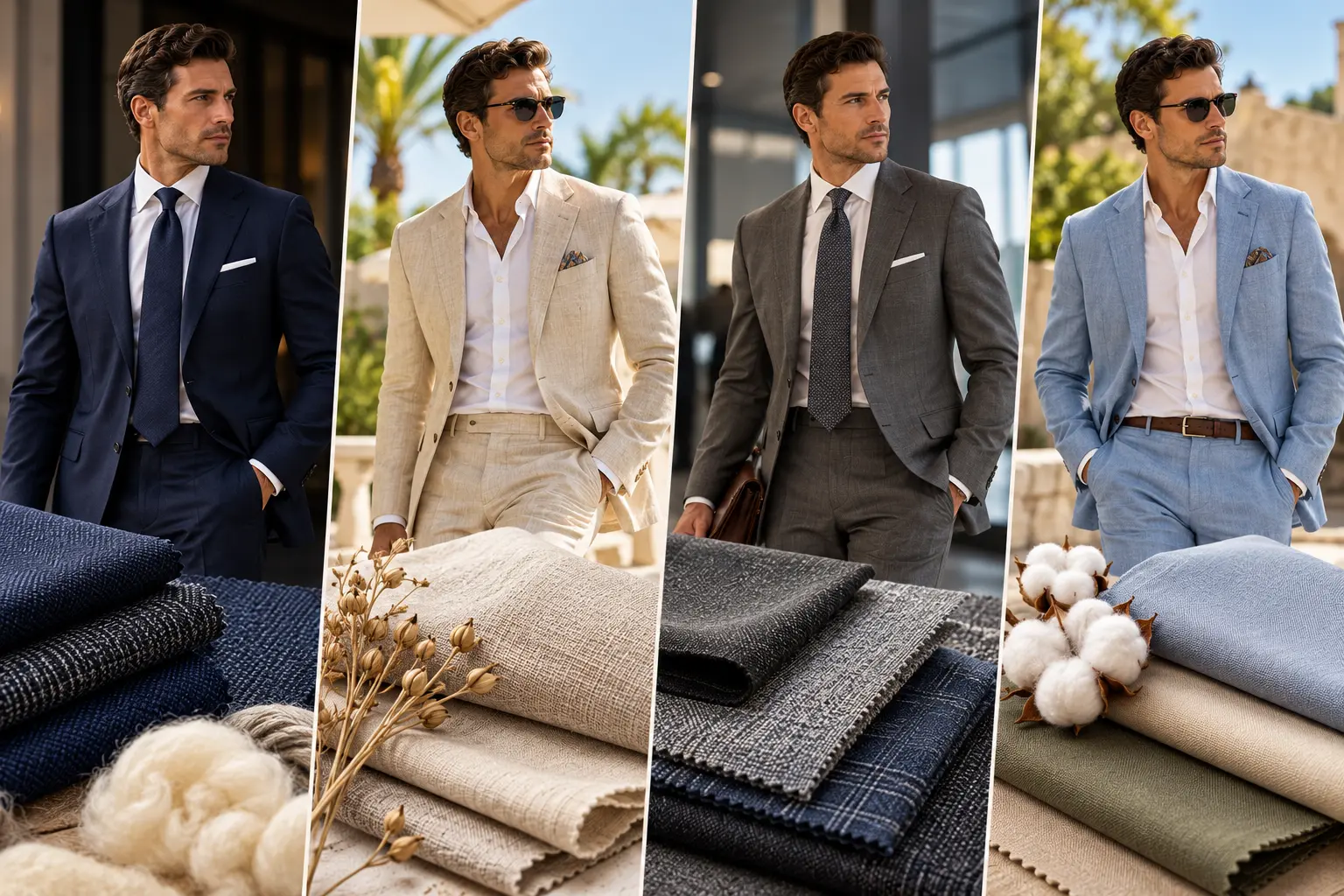
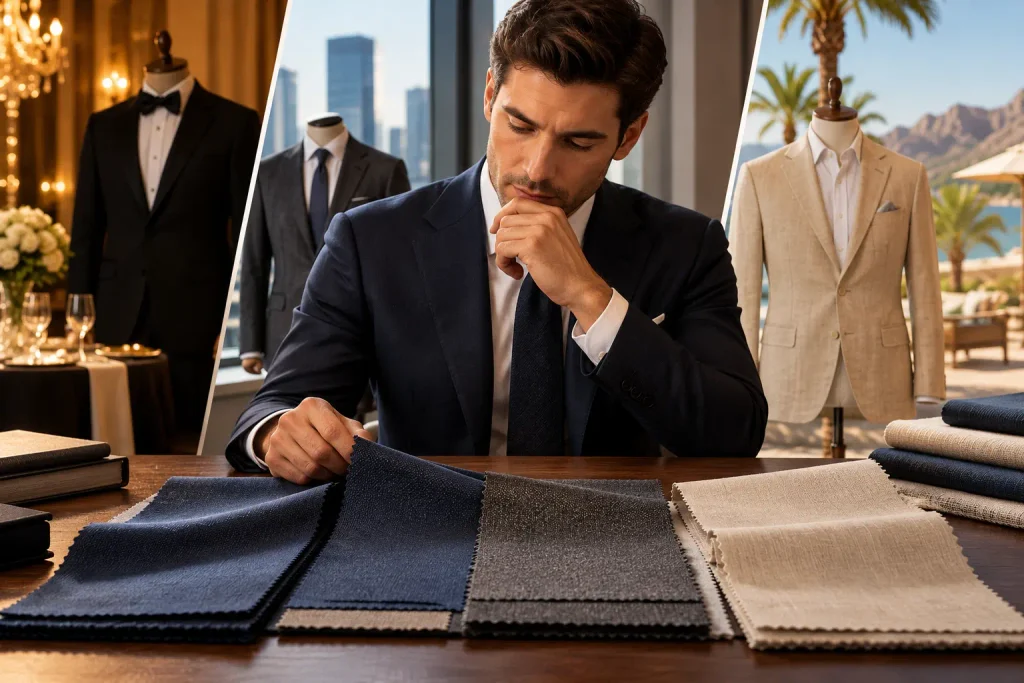
A deep navy wool, a textured charcoal fabric, and a lightweight linen blend can all look sophisticated. However, they serve different purposes. The right choice depends on where you plan to wear the suit, how often you will use it, and the level of comfort you expect.
For example, a heavier fabric may provide an elegant drape for formal occasions or cooler environments. A lightweight, breathable fabric may be more practical for outdoor events and warmer weather.
Before selecting a fabric, consider three essential questions:
- Where will you wear the suit most often?
- What weather conditions will you encounter?
- Do you need a versatile everyday suit or something designed for a specific occasion?
Answering these questions first helps narrow your options and ensures your final choice is practical as well as stylish.
Understanding the Most Popular Suit Fabrics
Different materials offer different advantages. Knowing their characteristics can help you identify which fabric is best suited to your needs.
1. Wool: A Versatile Choice for Custom Suits
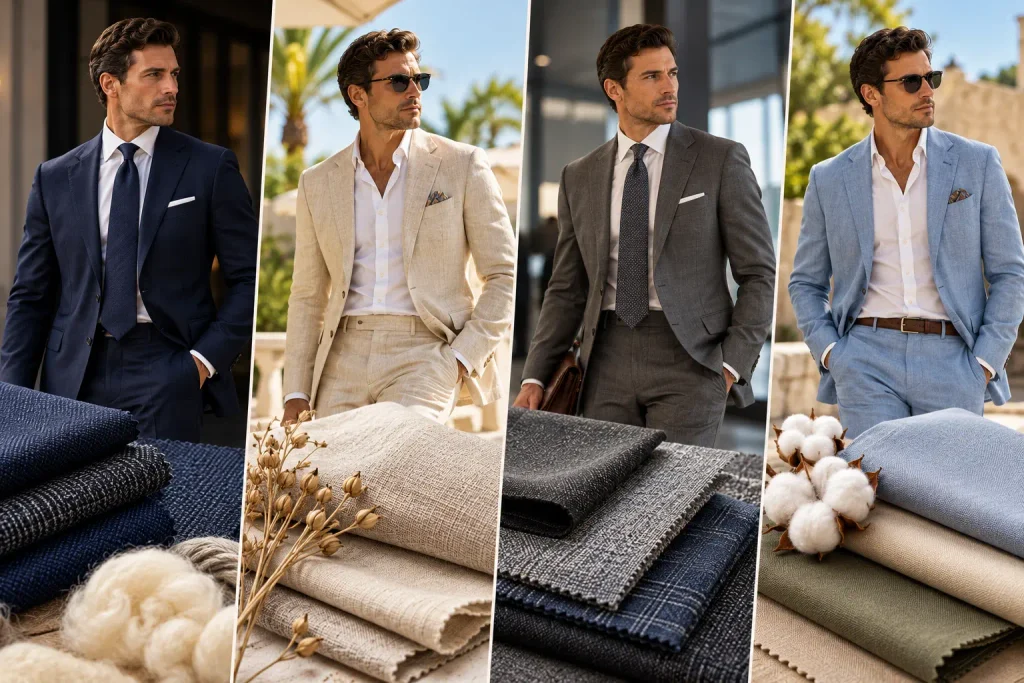
Wool remains a popular option for tailored suits because of its versatility, natural drape, and ability to maintain a refined appearance.
Depending on its construction and weight, wool can work well for business meetings, formal occasions, and everyday professional wear. It also comes in a wide range of weaves and finishes, making it suitable for different styles and seasons.
When considering wool, pay attention to the fabric’s weight, weave, and finish rather than relying on fiber composition alone. These characteristics influence how the suit feels, hangs, and performs throughout the day.
For men who want one suit that can serve multiple purposes, a versatile wool fabric is often a sensible starting point.
2. Linen: Relaxed Elegance for Warm Weather
Linen is valued for its breathability, lightweight feel, and naturally relaxed texture. It can be an excellent option for summer events, outdoor celebrations, and warm-weather dressing.
Its characteristic creases are part of its appeal, giving the garment a more relaxed appearance than a traditional business suit.
However, linen wrinkles more readily than many wool fabrics. If you prefer a consistently crisp look throughout a long workday, you may want to consider a wool blend or another fabric with better crease resistance.
Linen is particularly suitable when comfort and seasonal style are priorities.
3. Wool Blends: Balancing Comfort and Practicality
Wool blends combine wool with other fibers to achieve particular characteristics. When choosing the best fabric for a custom suit, consider that different blends may offer varying levels of softness, durability, breathability, and wrinkle resistance, depending on their composition and construction.
These fabrics can be useful for men who travel frequently, attend long meetings, or need a suit that transitions between different settings.
However, not all blends perform the same way. Their characteristics depend on the fibers used, their proportions, and the fabric’s construction. Always evaluate the actual material rather than assuming every blend offers the same benefits.
4. Cotton: A Smart Option for Less Formal Occasions
Cotton suits offer a distinct look that can work well for smart-casual settings, daytime events, and less formal professional environments.
Cotton often has a more casual texture than traditional suit wool. It can also crease during wear, so the choice depends on your preferred appearance and maintenance expectations.
A cotton suit may be an appealing alternative when you want tailored structure without the formality of a conventional business suit.
Fabric Weight Matters More Than You Might Think
When choosing fabric, many buyers pay attention to color and texture but overlook weight.
Fabric weight affects how a suit feels against the body, how it drapes, and how comfortable it may be in different conditions. A heavier fabric can provide more structure, while a lighter fabric may feel more comfortable in warmer environments.
However, weight alone does not determine comfort. Weave, fiber composition, lining, garment construction, and fit all contribute to the finished result.
For example, a lightweight fabric with a dense weave may feel different from a more open-weave fabric of similar weight. Likewise, a suit with a heavy lining may feel warmer than one constructed with less lining.
When exploring fabric options, ask how the material’s weight and construction suit your intended use. This is particularly important if you plan to wear your suit frequently.
Choosing the Right Suit Fabric for Your Climate
Your local climate should play an important role in fabric selection.
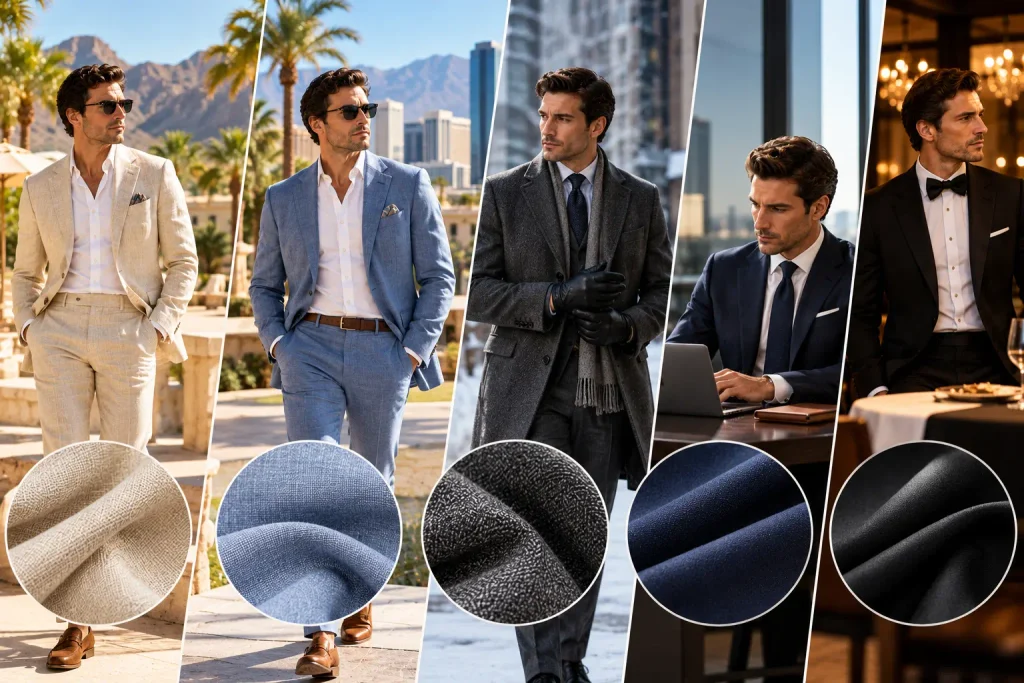
In warmer regions such as Las Vegas and Scottsdale, breathability and comfort deserve particular attention. Lightweight wool, linen, and suitable blends may be worth exploring depending on the occasion and the look you want to achieve.
For cooler conditions or indoor environments where a more structured appearance is preferred, a medium-weight wool may be a suitable option.
When choosing the best fabric for a custom suit, consider the environments in which you will wear it. A garment intended for outdoor summer events may require different characteristics from one designed for conference rooms, evening occasions, or year-round business use.
The goal is not simply to find the lightest fabric available. It is to choose a material that balances comfort, appearance, and practicality.
The Role of Weave, Texture, and Finish
Two fabrics made from the same fiber can look and feel noticeably different because of their weave and finish.
Here are a few common options to understand:
- Plain weave: Often creates a clean, straightforward surface suitable for a range of tailored garments.
- Twill: Recognizable by its diagonal texture, it can provide a distinctive appearance and a pleasing drape depending on the fabric.
- Hopsack: An open, basket-like weave commonly associated with sports jackets and relaxed tailoring.
- Flannel: A soft, brushed finish often chosen for cooler-weather tailoring and a more textured appearance.
These are not interchangeable options. Their suitability depends on the garment, climate, occasion, and personal preference.
A smooth, refined fabric may be ideal for a formal business suit, while a more textured material may work better for a sports jacket or a relaxed tailored look.
Thinking about texture alongside color helps create a more cohesive result.
How to Match Fabric to the Occasion
The best fabric for a custom suit also depends on how you intend to wear it.
For Business and Professional Settings
Consider versatile wool fabrics in navy, charcoal, or other understated colors. These options can work across meetings, presentations, and professional events, depending on their finish and styling.
For Weddings and Formal Events
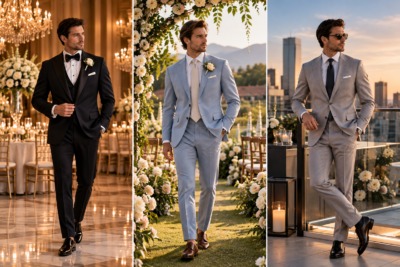
Think about the event’s dress code, season, venue, and time of day. A smooth, refined fabric may complement a formal occasion, while a lighter option may be more comfortable for an outdoor celebration.
For Travel and Frequent Wear
Consider how the fabric responds to creasing, how much maintenance it requires, and how easily it fits into your existing wardrobe. A suitable wool fabric or blend may be worth considering, depending on the construction.
For Casual and Social Occasions
Textured fabrics, cotton tailoring, and versatile sports jackets can create a polished appearance without feeling overly formal.
Selecting fabric with a specific purpose in mind helps ensure that your custom garment becomes a useful part of your wardrobe rather than a piece reserved for one occasion.
Don’t Overlook the Relationship Between Fabric and Fit
Even a beautiful fabric cannot compensate for a poorly fitting suit.
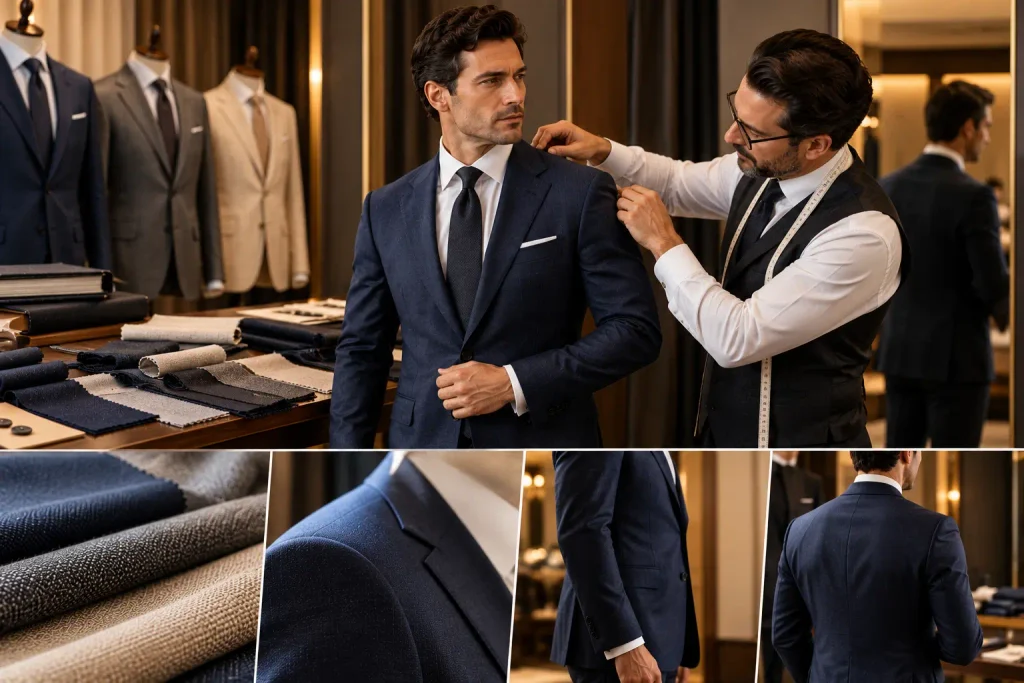
Fabric and fit work together to determine the final silhouette. A material with a softer drape may create a different appearance from one with more structure. The fabric’s weight and flexibility can also influence how the jacket hangs across the shoulders and chest.
This is why fabric selection should happen alongside discussions about your preferred fit, body proportions, and intended style.
Consider how you want the finished suit to look and feel. Do you prefer a clean, structured silhouette or a softer, more relaxed appearance? Will you spend most of the day sitting, standing, walking, or traveling?
These details help guide the selection process toward a fabric that complements both your preferences and your lifestyle.
Five Questions to Ask Before Choosing Your Suit Fabric
Before making your final decision, ask your tailor these five questions:
- Which fabrics are best suited to the occasions for which I need this suit?
- How will the fabric feel in my local climate?
- How will its weight and weave affect the suit’s drape and structure?
- How much creasing and maintenance should I expect?
- Will this fabric work with my preferred fit, color, and overall style?
These questions help you look beyond the swatch and understand how the finished garment will perform in everyday use.
An informed conversation with your tailor can also help you compare options without getting distracted by technical specifications that may not matter to your particular needs.
Create a Suit That Reflects Your Style With Eastin Suits
A custom suit should feel considered from the first design decision to the final fitting. Fabric is a fundamental part of that process, influencing the garment’s appearance, comfort, versatility, and overall character.
Rather than choosing a material simply because it looks impressive, consider how it will fit into your wardrobe, where you will wear it, and what you expect from it over time.
At Eastin Suits, you can explore custom tailoring options and personalize the details that make your suit your own, from fabric and color to lining and finishing touches.
Whether you are preparing for an important business meeting, a special celebration, or a wardrobe refresh, the right fabric can help bring your vision to life.
Ready to create a suit that reflects your personal style? Explore Eastin Suits and book an appointment at a location convenient for you in Henderson, Summerlin, or Scottsdale.