Your Suit Jacket Says More Than You Think
You could be wearing a premium fabric, a designer label, or an expensive timepiece—but if your suit jacket fit is off, none of it matters. People rarely notice the price tag, but they instantly notice when a jacket looks awkward, stiff, or oversized.
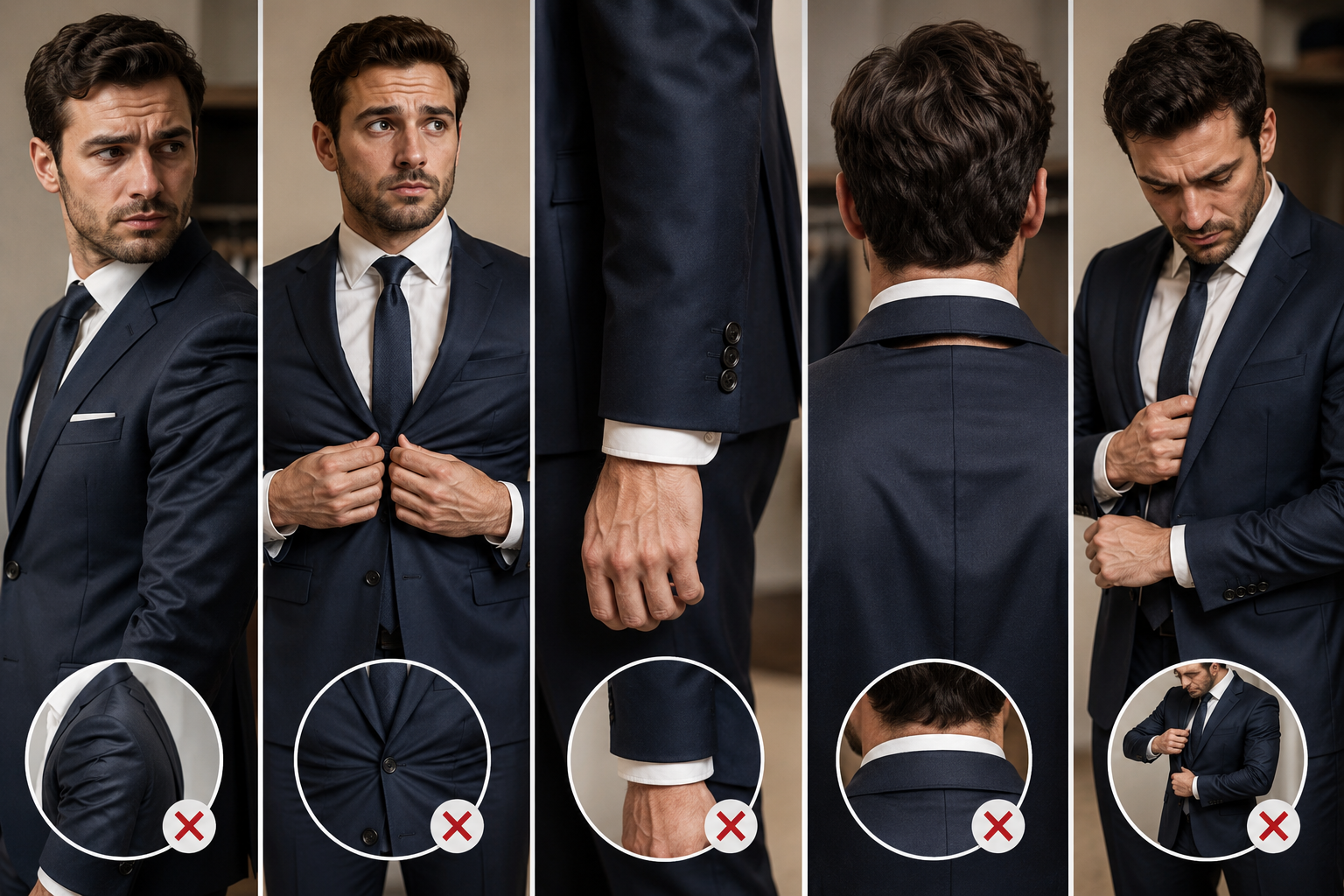
The good news? You don’t need to be a tailor to recognize the warning signs. A properly fitted jacket should complement your body, move naturally with you, and create a clean, balanced silhouette. If yours does any of the five things below, it’s likely not fitting the way it should.
1. Your Shoulders Have Wrinkles or Overhang
The shoulders are the foundation of a great suit jacket fit. If they aren’t right, almost nothing else will look right either.
Look in the mirror.
- Do the shoulder seams extend past your natural shoulder?
- Do you notice ripples or wrinkles near the shoulder pads?
- Does the jacket appear to droop?
If you answered yes to any of these, the jacket is probably too large. On the other hand, if the shoulders feel tight or restrict movement, it’s likely too small.
Why it matters: Shoulder fit is one of the most difficult areas to alter. Getting it right from the start makes all the difference.
2. The Jacket Pulls When You Button It
A jacket should gently shape your body—not fight against it.
Button the front and stand naturally. If you notice an “X” shape or the fabric pulling across your chest or stomach, the jacket is too tight. If the fabric hangs loosely with excess material around the waist, it’s too large.
A balanced suit jacket fit follows your body’s shape while leaving enough room to move comfortably.
Quick Test: You should be able to slide a flat hand between your chest and the buttoned jacket without feeling squeezed or swimming in extra space.
3. Your Sleeves Are Too Long or Too Short
Sleeve length is one of the easiest ways to tell whether a jacket fits properly.
Ideally, your jacket sleeve should reveal about ¼ to ½ inch of your shirt cuff. This small detail creates a polished, intentional look.
Common mistakes include:
- Sleeves covering your entire shirt cuff
- Sleeves stopping several inches above your wrist
- Uneven sleeve lengths
These details may seem minor, but they significantly affect the overall appearance of your suit jacket fit.
4. The Collar Doesn’t Sit Flat Against Your Neck
One of the most overlooked signs of poor fit is the collar.
Look behind your neck.
Does the collar stay flush against your shirt, or is there a noticeable gap?
A collar gap usually indicates that the jacket wasn’t designed for your posture, shoulder slope, or body shape. Even an expensive suit can look poorly made if the collar doesn’t sit correctly.
A well-tailored jacket should rest comfortably against your neck whether you’re standing still or walking.
5. You Constantly Adjust Your Jacket
This is perhaps the biggest clue of all.
If you’re always:
- Pulling the jacket down
- Adjusting the sleeves
- Straightening the lapels
- Rebuttoning after every movement
- Tugging at the shoulders
…your jacket is trying to tell you something.
A proper suit jacket fit should feel natural. You shouldn’t have to think about it every few minutes.
The best-fitting jackets quietly do their job while you focus on everything else.
Why Fit Matters More Than Brand
Many people assume that luxury comes from designer labels or expensive fabrics.
In reality, most people couldn’t identify the brand of your suit from across the room.
What they do notice is:
- Clean shoulders
- Balanced proportions
- Proper sleeve length
- A flattering silhouette
- Confident posture
These qualities make a suit appear premium, regardless of its price.
That’s why a perfectly tailored jacket often looks more impressive than an expensive off-the-rack designer suit.
Can a Tailor Fix These Problems?
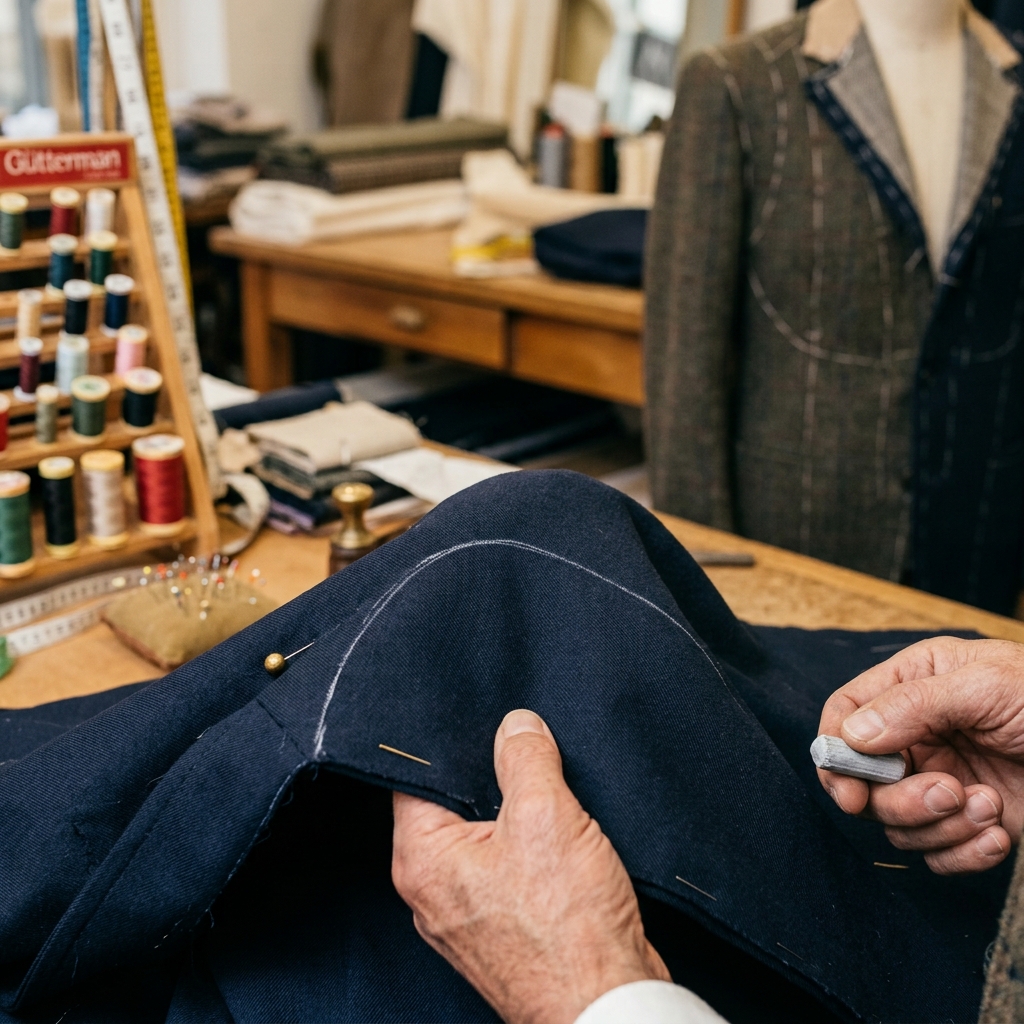
The answer depends on the issue.
A skilled tailor can often improve:
- Sleeve length
- Waist suppression
- Jacket length (in some cases)
- Minor collar adjustments
However, some problems are much harder—or impossible—to correct.
These include:
- Poor shoulder fit
- Incorrect chest balance
- Significant sizing issues
That’s why starting with the right fit—or investing in a custom suit—is often the smarter long-term choice.
Why Custom Tailoring Makes All the Difference
Every body is different.
Some men have broader shoulders, longer arms, an athletic build, or a posture that standard sizing simply doesn’t accommodate.
Off-the-rack jackets are designed for averages.
Custom tailoring is designed for individuals.
At Eastin Suits, every jacket begins with precise measurements and personal consultations to ensure the finished garment complements your build, your style, and the way you move. The result is a suit jacket fit that feels as good as it looks.
Ready to Upgrade Your Suit Jacket Fit?

If you recognized one or more of these signs, it may be time to stop settling for a jacket that’s “close enough.” At Eastin Suits, we specialize in creating garments that are tailored to your unique build, style, and lifestyle. From precise measurements to expert craftsmanship and lifetime alterations, every suit is designed to deliver a flawless suit jacket fit that looks sharp and feels effortless.
Book your personalized fitting today and experience the confidence that comes with wearing a suit made just for you.
Final Thoughts
A great jacket shouldn’t draw attention because it’s expensive—it should stand out because it fits perfectly.
The next time you put on a suit, take a closer look.
Are the shoulders clean?
Does the collar sit flat?
Are the sleeves the right length?
Can you button the jacket comfortably without pulling?
If your jacket does any of these five things, it may be time for professional alterations—or a custom-made suit that fits from day one.
Because when it comes to style, fit isn’t a small detail. It’s everything.