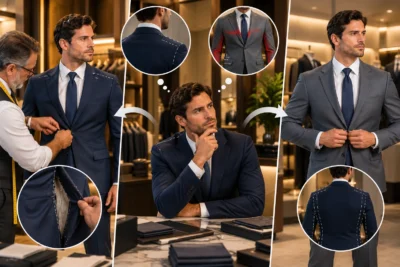
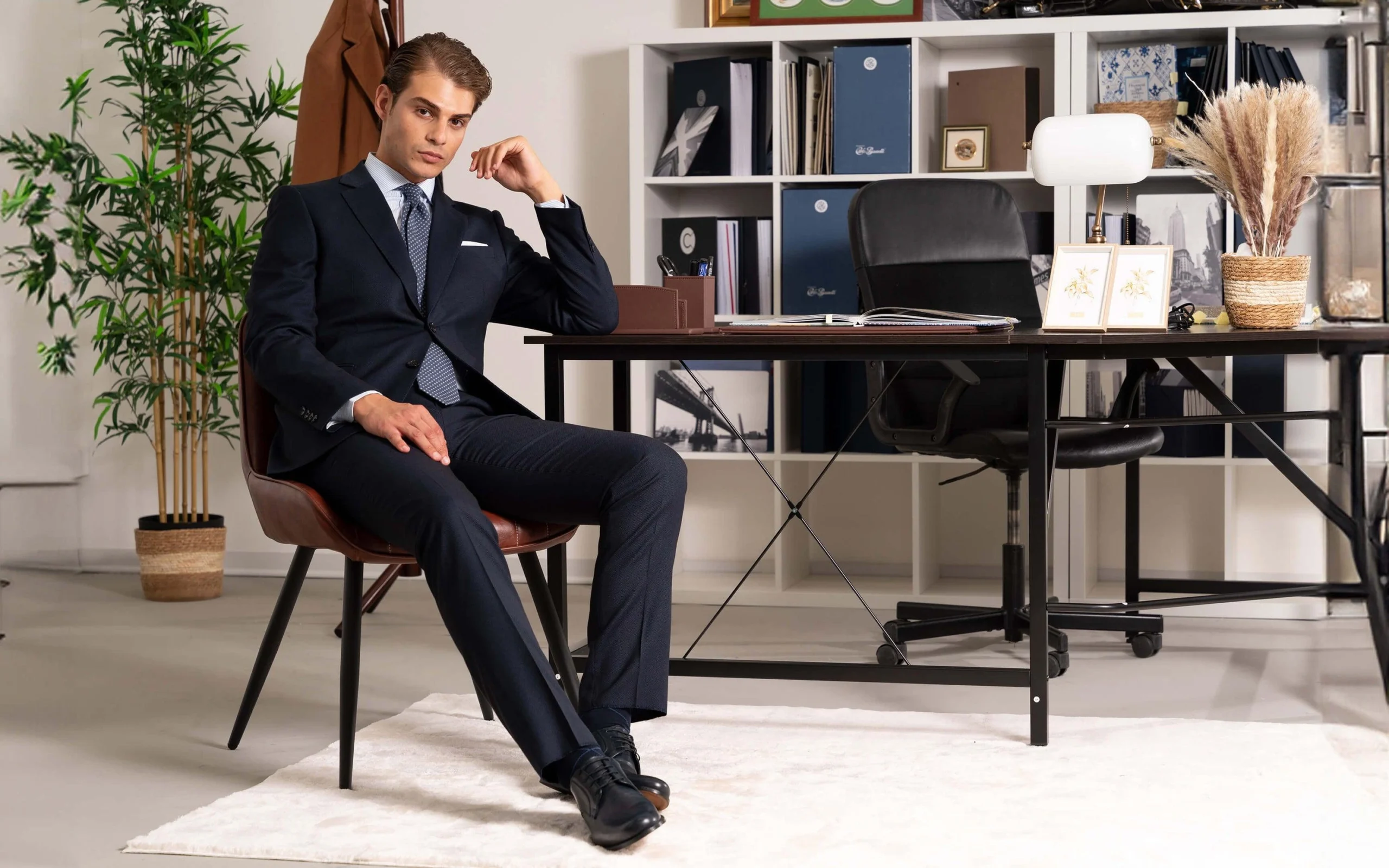
A suit can look perfect when you stand in front of a mirror, but the real test begins when you sit down. Checking your suit fit sitting down helps you identify issues such as a jacket pulling across your stomach, trousers feeling tight around your thighs, or a waistband becoming uncomfortable after just a few minutes.
These small issues can make a suit uncomfortable during business meetings, weddings, formal dinners, and long events.
Before purchasing a suit, take a few minutes to check how it fits in different positions. Knowing how a suit fit sitting down should feel can help you identify problems before spending money on a suit that looks good but doesn’t work for your everyday needs.
In this guide, we’ll cover five simple tests you can perform in a fitting room to evaluate your suit’s comfort, mobility, and overall fit.
Why Sitting Comfort Matters When Choosing a Suit
A suit should do more than look sharp when you’re standing still. It should also allow you to sit, move, and maintain a natural posture without constant adjustments.
When you sit, your body changes position. Your hips flex, your thighs expand slightly, and the fabric around your waist and knees needs to accommodate that movement. A jacket that feels comfortable while standing may become restrictive when buttoned or when you lean forward.
The goal isn’t to make a suit feel completely loose while seated. It’s to find a balance between a clean silhouette and enough room for natural movement.
5 Tests to Check Your Suit Fit Before Buying
1. Sit Down Without Unbuttoning Your Jacket

Start by sitting in a chair while wearing your suit jacket. Notice what happens when you bend at the waist and settle into a natural sitting position.
If your jacket is buttoned, check whether the fabric pulls sharply across your stomach or creates pronounced diagonal wrinkles around the button. You should be able to sit without feeling excessive pressure around your midsection.
However, a buttoned jacket may naturally feel more restrictive when seated. For comfort, it’s generally appropriate to unbutton a traditional suit jacket when sitting, especially during a meal or meeting.
What to check:
The jacket doesn’t feel excessively tight across your chest or stomach.
The buttons aren’t under significant tension when standing.
The jacket returns to its natural shape when you stand up again.
If the jacket only feels comfortable when completely unbuttoned, check whether the waist or chest needs adjustment before purchasing.
2. Check Your Trouser Waistband and Thighs
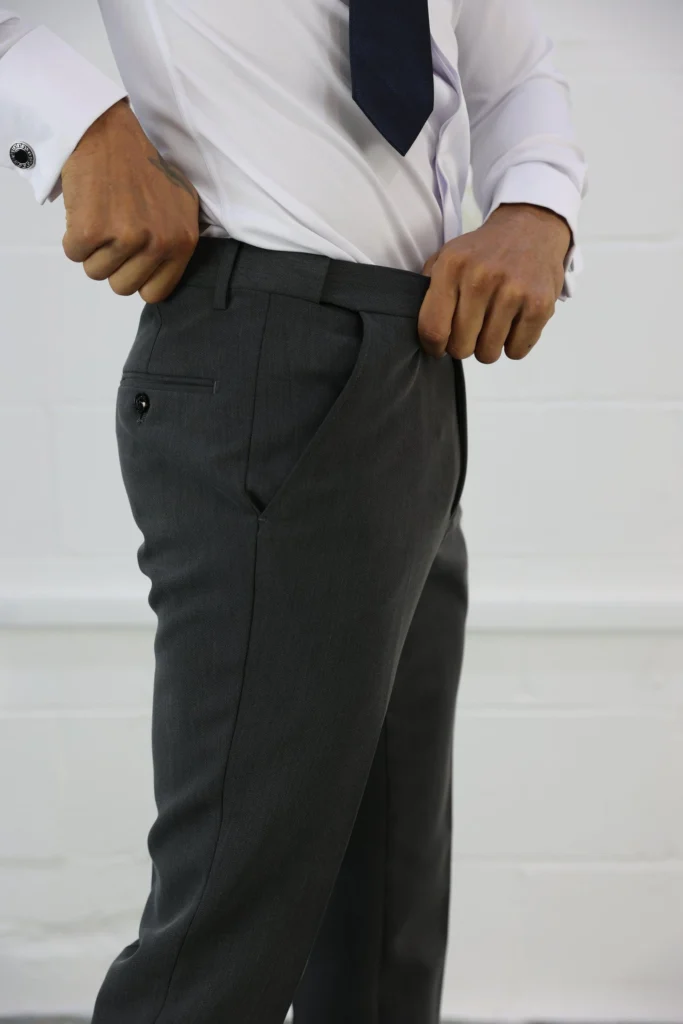
Your trousers should remain comfortable when your hips and knees bend. A waistband that feels fine while standing may dig into your stomach once you sit down.
Sit normally and pay attention to pressure around your waist, hips, and upper thighs. Your trousers should stay securely in place without pinching or restricting circulation.
A little change in how the fabric sits is normal. Persistent discomfort is not.
Look for these signs:
The waistband presses painfully into your stomach.
The fabric pulls tightly across your thighs.
The front pockets spread open noticeably because the trousers are too tight.
You need to loosen your belt to sit comfortably.
If the waistband is the only problem, an alteration may be possible. If the seat and thighs are also restrictive, you may need a different trouser cut or size.
3. Lean Forward and Reach Across a Table

Think about how often you lean forward during a meeting, reach for a document, or use a laptop. Your suit should accommodate these everyday movements without making you feel restricted.
While seated, lean forward slightly and reach across a table as you naturally would during a conversation or work session.
Pay attention to your shoulders, upper back, and sleeves. If the jacket feels as though it’s pulling backward or restricting your arms, your suit fit sitting down may need attention.
Check whether:
You can reach forward without excessive tension across your upper back.
The shoulders remain comfortable rather than feeling trapped.
The sleeves allow natural arm movement.
The jacket doesn’t ride up excessively with every movement.
Some movement in the jacket is normal. The concern is persistent pulling or restriction that makes ordinary activities uncomfortable.
4. Cross Your Legs and Check Trouser Length
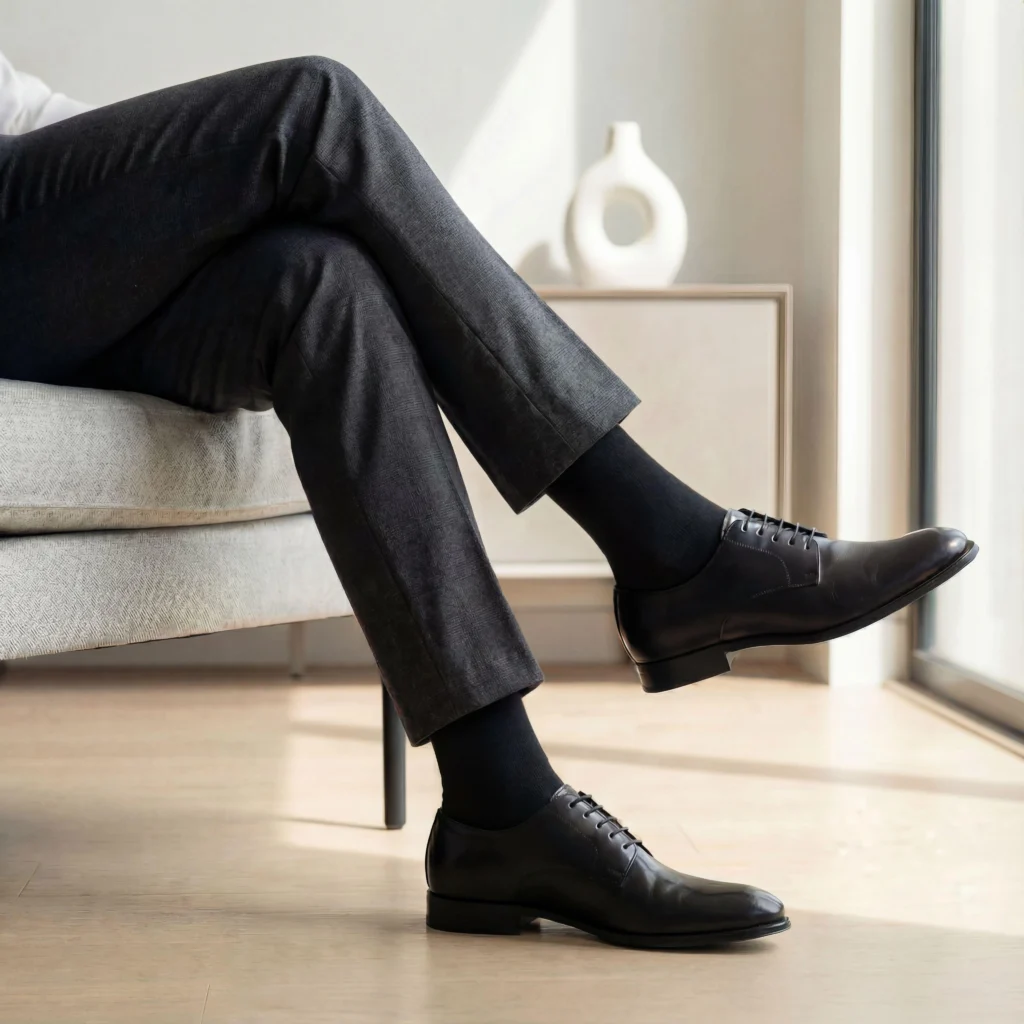
Crossing your legs is a useful way to check how your trousers behave when your knees bend and your legs change position.
When you cross one leg over the other, the trouser fabric naturally moves upward. This is normal and doesn’t automatically mean your trousers are too short.
Instead, pay attention to whether the fabric pulls sharply around your knees, thighs, or seat. You should be able to change positions without excessive tension or discomfort.
Also observe the trouser length when you return to a standing position. The hem should fall appropriately over your shoes, depending on your preferred trouser break and style.
If the trousers feel restrictive when crossing your legs, the issue could be the thigh width, seat fit, or overall cut rather than the length alone.
5. Stand Up and Check How the Suit Recovers
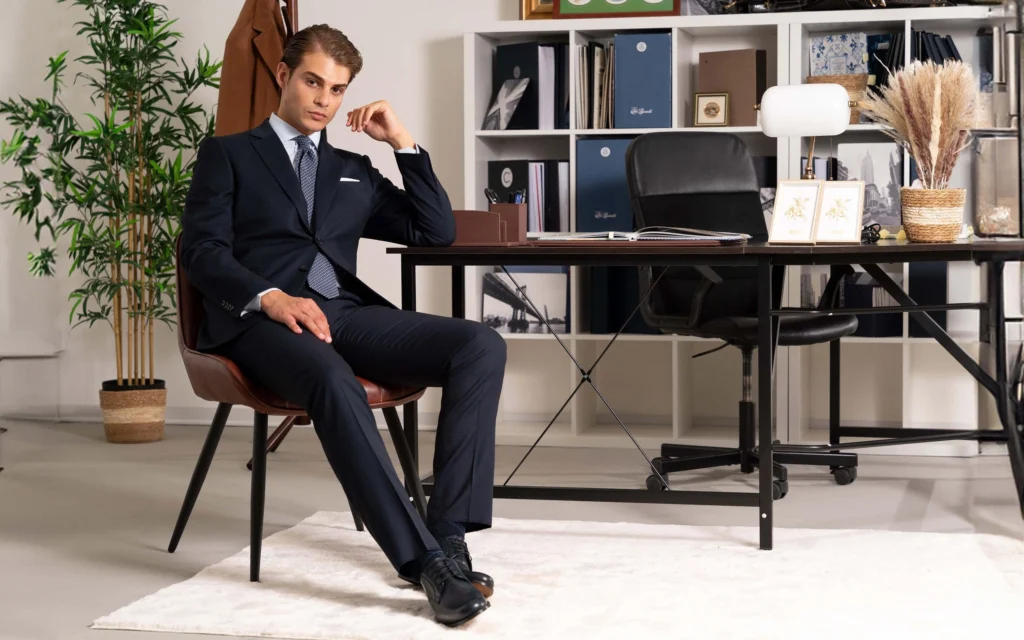
The final test is what happens after you’ve been sitting for a few minutes.
Stand up naturally and look at your suit in the mirror. Check whether the jacket settles back into place, the trousers return to their intended position, and the fabric remains reasonably smooth.
Some wrinkles are unavoidable, especially around the knees, hips, and elbows. What matters is whether your suit fit sitting down remains comfortable and whether you need to repeatedly pull at the jacket or adjust the waistband.
Look for:
A jacket that sits evenly across the shoulders.
Trousers that return to a comfortable position.
No persistent twisting or bunching caused by the fit.
A silhouette that looks balanced without constant adjustment.
This final check helps you understand how the suit performs beyond a single standing pose.
What Should a Suit Feel Like When You Sit Down?
A well-fitting suit should feel secure without feeling restrictive. You shouldn’t expect it to feel identical when standing and sitting because your body position changes.
Use this quick reference during your fitting.
| Area | What to look for |
|---|---|
| Jacket | No painful pressure across the chest or stomach |
| Shoulders | Comfortable movement without significant restriction |
| Waistband | Secure without digging into your stomach |
| Thighs and seat | Enough room to bend your knees and sit naturally |
| Trouser length | Appropriate coverage when standing, with normal upward movement when seated |
| Overall fit | Easy transitions between sitting, standing, and walking |
Remember that a suit doesn’t need to be loose to be comfortable. The right fit follows your natural proportions while allowing practical movement.
Should You Size Up If Your Suit Feels Tight When Sitting?
Not necessarily. Sizing up may solve one problem while creating another.
For example, if the shoulders fit properly but the waistband feels tight, a larger size could leave the jacket shoulders too wide and the sleeves too long.
Before changing sizes, identify where the restriction occurs.
If the jacket pulls across the chest or stomach, the cut, size, or waist shaping may need adjustment.
If the waistband feels tight but the rest of the trousers fit well, a tailor may be able to adjust it.
If the thighs and seat feel restrictive, a different trouser cut may be more suitable.
If the shoulders restrict movement, the issue may involve the jacket’s structure or sizing.
Some alterations are straightforward, while others are limited by the garment’s construction and available fabric. Ask a tailor to assess the suit before assuming every fit issue can be corrected.
Why a Personalized Suit Fitting Can Make a Difference
Off-the-rack suits are manufactured using standardized sizing, but people have different shoulder widths, torso lengths, waist proportions, and leg shapes. That’s why a suit that fits well in one area may feel uncomfortable in another.
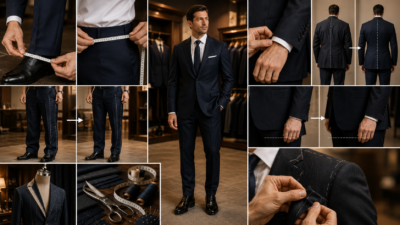
A personalized fitting helps identify these differences before they become problems. Instead of focusing only on how the suit looks in a mirror, the fitting process can consider your posture, proportions, movement, and intended use.
At Eastin Suits, the goal is to help you find a suit that reflects your personal style while providing a considered fit for your needs. Whether you’re preparing for a wedding, an important business meeting, or a formal occasion, taking the time to assess fit can make your purchase more rewarding.
You can explore a personalized fitting experience in Henderson, Summerlin, or Scottsdale.
Final Thoughts
A suit should look sharp when you stand and remain comfortable when you sit, reach, and move throughout the day. Checking your suit fit sitting down is an important step in finding the right balance between style, comfort, and mobility.
Before buying your next suit, perform these five checks: sit with your jacket buttoned, assess your waistband and thighs, lean forward, cross your legs, and stand up to evaluate how the suit recovers.
These simple tests can help you spot potential problems before committing to a purchase. If something feels wrong, ask whether an adjustment can solve it or whether another cut would be a better choice.
The best suit isn’t simply the one that looks good in the fitting room. It’s the one that continues to feel right when you actually wear it.
Ready for a suit that feels as good as it looks? Book a private fitting with Eastin Suits and find a fit tailored to your proportions, preferences, and occasion.