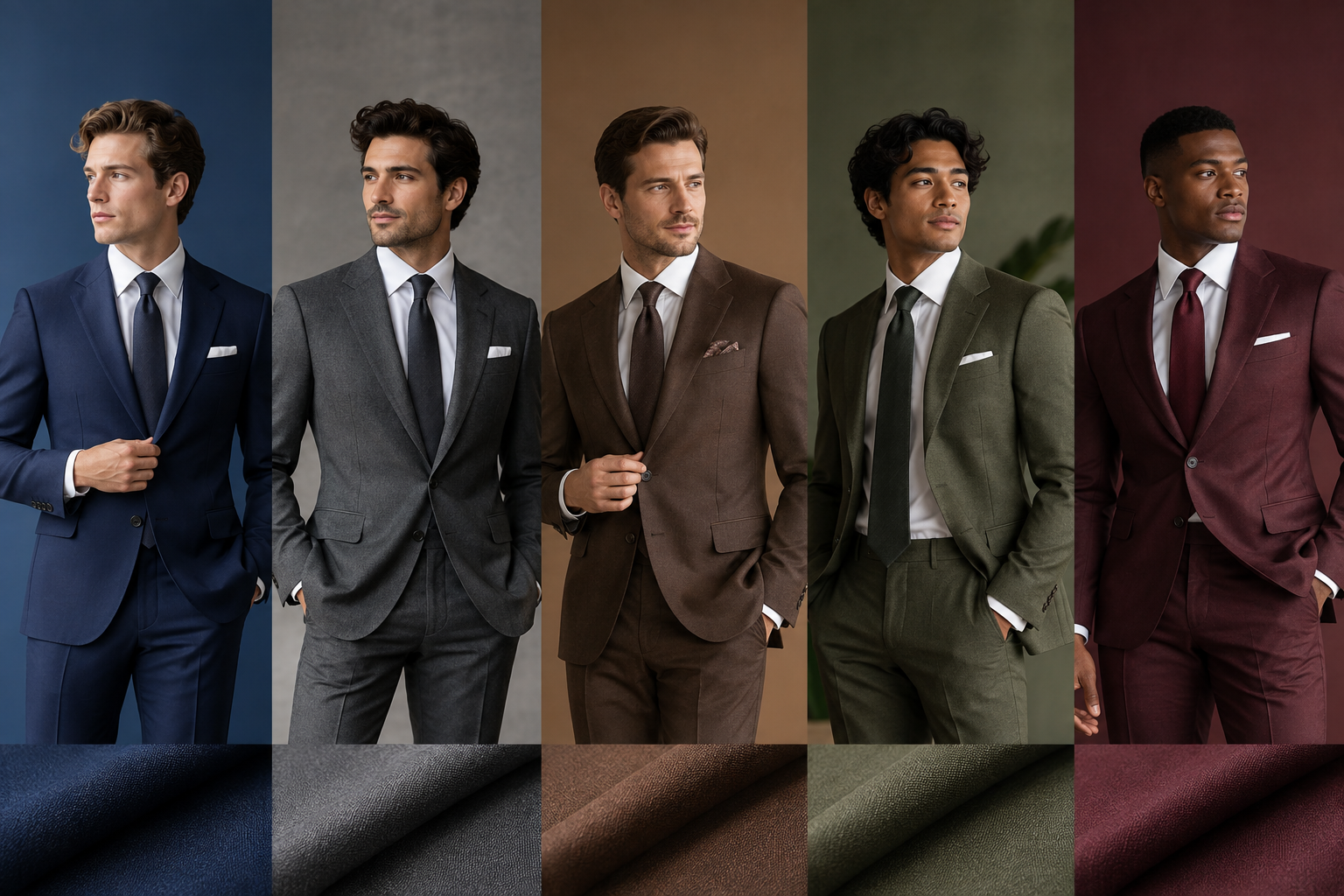
Choosing the right suit is about more than finding a great fit. The color of your suit can dramatically influence how polished, confident, and put-together you look. While classic shades such as navy, charcoal, and black work for almost every wardrobe, understanding the right suit color for skin tone can help you choose shades that complement your complexion and natural coloring.
Understanding the right suit color for your skin tone can help you make more confident decisions when choosing a suit for a wedding, business meeting, formal event, or everyday professional wardrobe.
At Eastin Suits, custom tailoring goes beyond measurements. With a wide selection of fabrics and personalized styling, you can create a suit that works with your appearance, lifestyle, and personal style.
Why Suit Color Matters
The color of a suit sits close to your face, making it one of the first things people notice about your appearance. A well-chosen shade can create balance between your complexion and clothing, while the wrong shade may make your skin appear washed out or overly contrasted.
This does not mean there are strict rules about which colors you can or cannot wear. Instead, understanding your natural coloring gives you a useful starting point.
When selecting a suit, consider three things:
- Your overall skin complexion
- Your skin’s undertone
- The level of contrast between your hair, eyes, and complexion
These factors can help narrow down the most flattering options.
Understanding Your Skin Undertone
Understanding your undertone can make choosing clothing colors easier, but it is only one part of the process. Your hair, eyes, and overall contrast also influence how color choices complement your natural features.
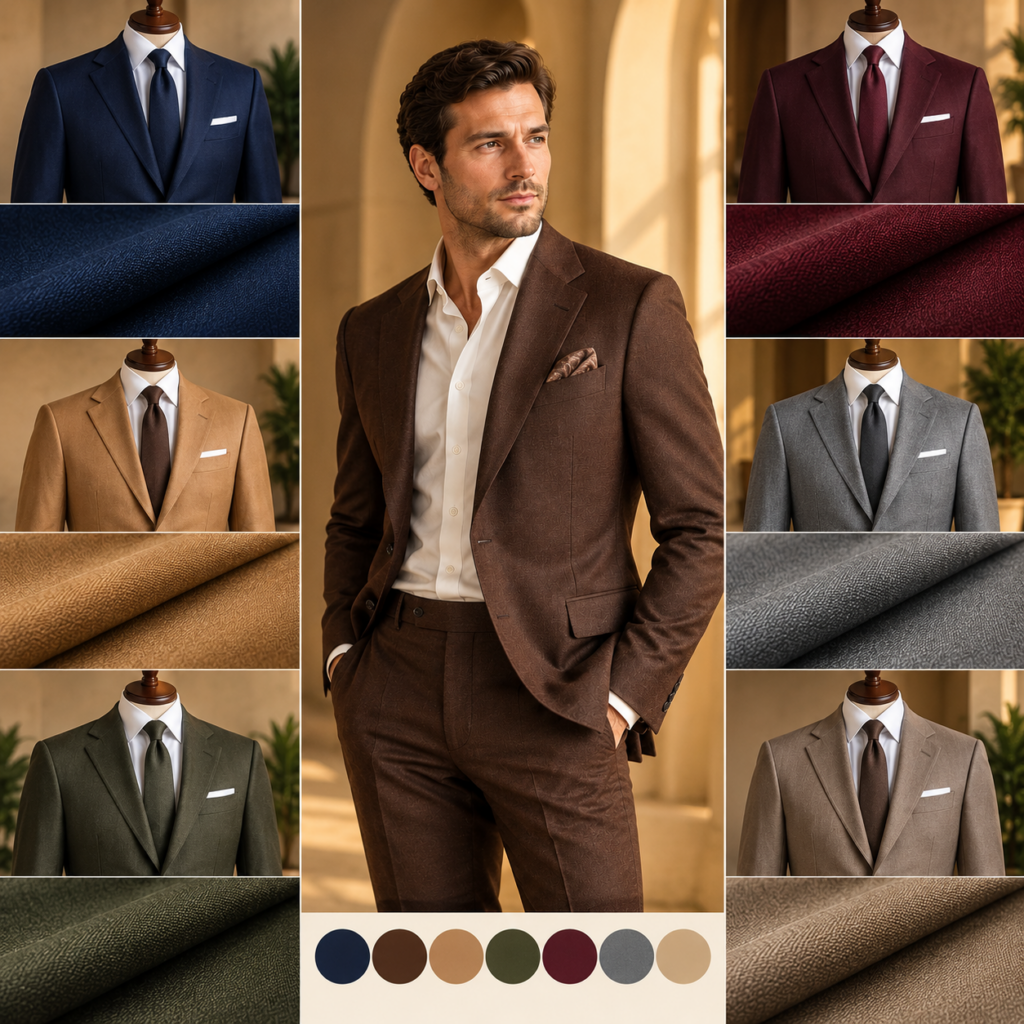
Warm Undertones
Warm undertones often have golden, peach, or yellow characteristics. Earthy and rich colors can complement this type of complexion particularly well.
Consider shades such as:
- Warm navy
- Chocolate brown
- Camel
- Olive
- Burgundy
- Warm gray
- Tan
These colors can create a natural, sophisticated appearance without overwhelming the complexion.
Cool Undertones
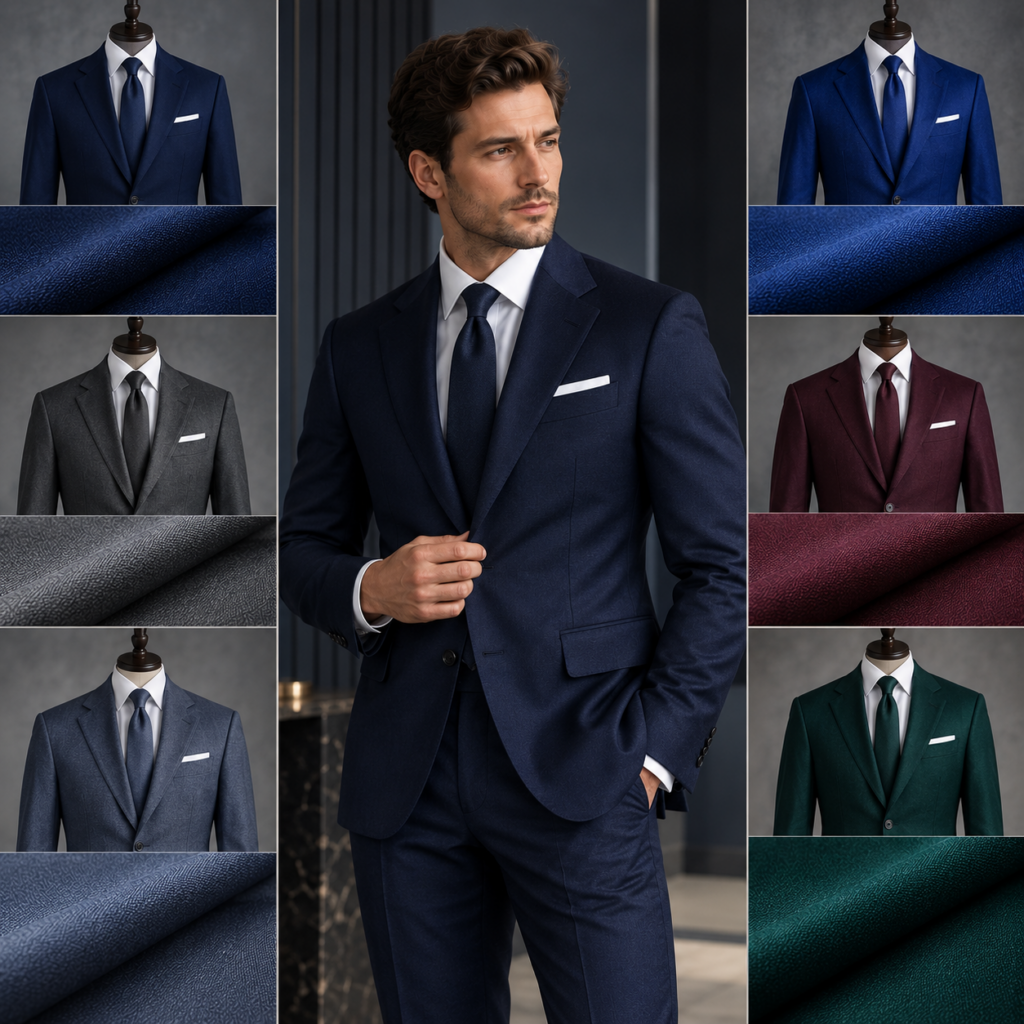
Cool undertones can have pink, red, or bluish characteristics. Cooler shades and deeper jewel tones often create an attractive contrast.
Good options include:
- Cool navy
- Charcoal gray
- Slate
- Deep blue
- Burgundy
- Plum
- Emerald
For formal occasions, charcoal and deep navy can be especially versatile.
Neutral Undertones
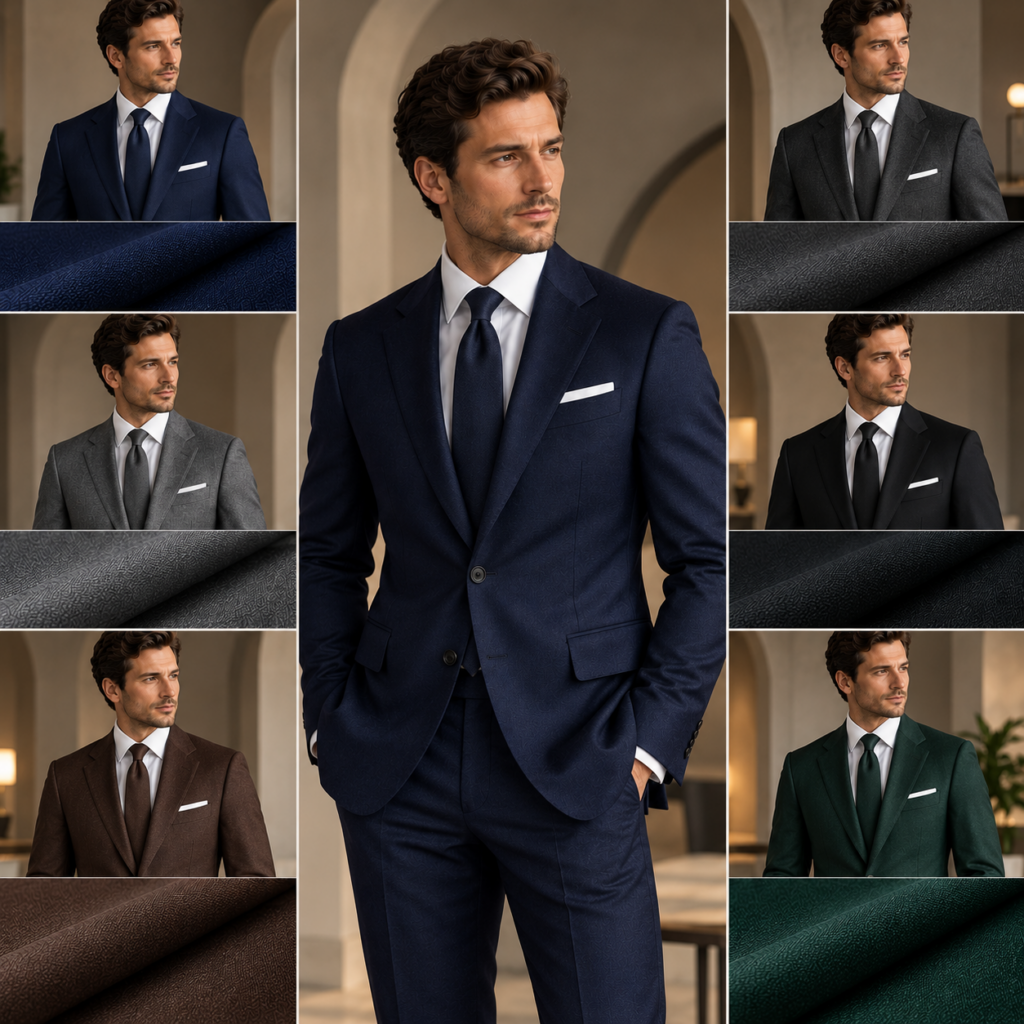
If your complexion sits between warm and cool, you have greater flexibility. Many classic suit colors can work exceptionally well.
Try:
- Navy
- Charcoal
- Medium gray
- Black
- Deep brown
- Burgundy
- Forest green
A neutral undertone allows you to experiment with both warm and cool shades while focusing more on the overall contrast of your outfit.
Best Suit Colors for Fair Skin
Men with fair complexions often benefit from colors that create definition without creating an overly harsh contrast.
Navy is an excellent starting point because it provides enough depth while remaining versatile. Medium and charcoal gray can also create a refined appearance.
For something more distinctive, consider burgundy, forest green, or a deep brown.
Very pale shades can sometimes blend too closely with a fair complexion, so adding contrast through the suit, shirt, or accessories can help create a stronger overall look.
Best Suit Colors for Medium or Olive Skin
Medium and olive complexions offer considerable versatility when it comes to tailoring.
Navy, charcoal, medium gray, and dark brown are dependable choices. Richer shades such as burgundy, forest green, and deep teal can also add personality without looking excessive.
If you want a sophisticated wardrobe that works across different occasions, start with navy and charcoal before adding more distinctive colors.
Best Suit Colors for Darker Skin
Darker complexions can provide an excellent foundation for both classic and bold suit colors.
Navy, charcoal, black, and deep gray offer timeless options. At the same time, jewel tones such as burgundy, emerald, and royal blue can create striking contrast.
Lighter shades can also work beautifully when styled intentionally. Light gray, cream, beige, and tan can create a sophisticated contrast, particularly for spring and summer events.
The key is not simply choosing a lighter or darker color. It is finding a shade that creates intentional contrast with your complexion.
How Hair and Eye Color Influence Your Choice
Your complexion is only one part of the equation. Hair and eye color can also influence how a suit looks on you.
For example, a man with dark hair and eyes may look particularly striking in deeper navy, charcoal, or burgundy. Someone with lighter hair and eyes may prefer softer shades such as medium gray, blue, or lighter brown.
This is why choosing a suit color based solely on skin complexion can sometimes be limiting. Your complete coloring should be considered when creating a polished wardrobe.
Navy: The Most Versatile Starting Point
If you are purchasing your first custom suit and are unsure where to start, navy is one of the safest choices.
A well-selected navy suit can work for:
- Business meetings
- Weddings
- Date nights
- Formal dinners
- Networking events
- Professional portraits
- Evening occasions
The exact shade matters. A deep midnight navy creates a more formal impression, while a medium navy can feel slightly more relaxed and versatile.
Charcoal Gray for a Refined Look
Charcoal is another excellent choice for men who want a sophisticated alternative to navy.
It works particularly well for professional environments and formal occasions. Unlike black, charcoal can provide a softer and more dimensional appearance while maintaining a polished aesthetic.
Pair a charcoal suit with a crisp white shirt for a timeless combination, or introduce subtle color through your tie or pocket square.
Brown and Earth Tones
Brown suits have become an increasingly stylish option for men who want something beyond traditional navy and gray.
Chocolate, espresso, taupe, camel, and other earth tones can create a warm and sophisticated appearance.
These colors can be especially effective for daytime events, fall weddings, business-casual settings, and occasions where you want your outfit to feel distinctive without being loud.
Don’t Forget the Occasion
The best suit color is not determined by complexion alone. The event should influence your decision as well.
For business settings, navy and charcoal remain dependable choices.
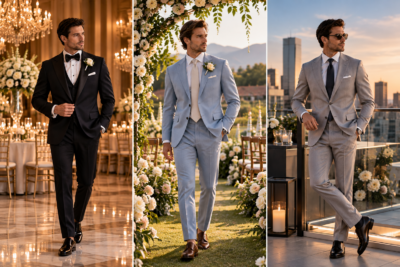
For weddings, you can explore lighter gray, blue, brown, or richer colors depending on the season and dress code.
For black-tie events, a traditional black tuxedo or midnight navy tuxedo is usually the appropriate choice.
For social events, you have more freedom to experiment with colors, textures, and patterns.
The goal is to balance personal style with the expectations of the occasion.
Think About Contrast
One of the most useful principles when selecting a suit is contrast.
If your complexion, hair, and eyes are relatively similar in depth, a suit with moderate contrast can create a balanced appearance.
If you have a high-contrast appearance, such as very dark hair with a lighter complexion, deeper suit colors can create a naturally striking look.
There is no universal formula. The right balance depends on your individual features and the effect you want your clothing to create.
Your Shirt and Accessories Matter Too
Even the perfect suit color can look different depending on what you wear with it.
A white shirt creates strong contrast and works with nearly every traditional suit color. Light blue provides a softer combination with navy and gray, while cream can work beautifully with warmer brown and earth-tone suits.
Your tie, pocket square, belt, shoes, and watch also contribute to the overall appearance.
Rather than selecting each item separately, think of the entire outfit as one composition.
Why Custom Tailoring Gives You More Options
Finding the right color is only part of creating an exceptional suit. The fabric, construction, fit, and styling all influence the final result.
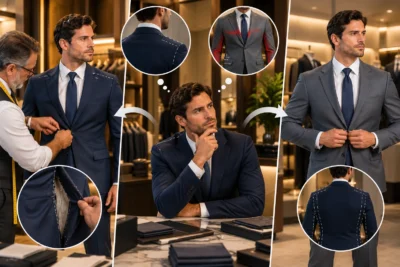
Custom tailoring allows you to select from a wider range of fabrics and colors while creating a silhouette specifically suited to your measurements.
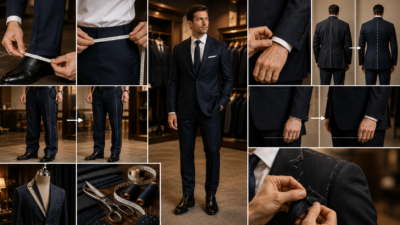
At Eastin Suits, personalized styling and precise measurements help transform your preferred color and fabric into a suit designed around you.
Whether you prefer classic navy, sophisticated charcoal, rich burgundy, or something more distinctive, the goal is to create clothing that feels naturally yours.
Final Thoughts
The right suit color should complement your complexion while reflecting your personality and the occasion. Start by understanding your skin’s undertone, consider the contrast created by your hair and eyes, and then think about where and how you plan to wear the suit.
If you are building a versatile wardrobe, navy and charcoal are excellent foundations. Once those essentials are covered, experimenting with brown, burgundy, forest green, lighter grays, and other sophisticated shades can help develop a more distinctive personal style.
Ultimately, the best suit color is one that makes you feel confident the moment you put it on.
When you’re ready to create a suit around your individual style, Eastin Suits offers personalized custom tailoring designed to help you find the right combination of fit, fabric, color, and detail.
Ready to create your next custom suit? Schedule an appointment with Eastin Suits and experience personalized tailoring designed around you.