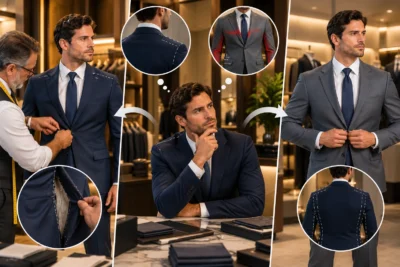
Buying a suit off the rack does not always mean settling for an imperfect fit. With the right suit alterations, many details can be adjusted to make a jacket or pair of trousers look significantly better. However, tailoring has its limits.
Knowing what can—and cannot—be changed can help you choose a suit more intelligently and avoid spending money trying to correct a fit that was never right to begin with.
What Can Be Fixed With Suit Alterations?
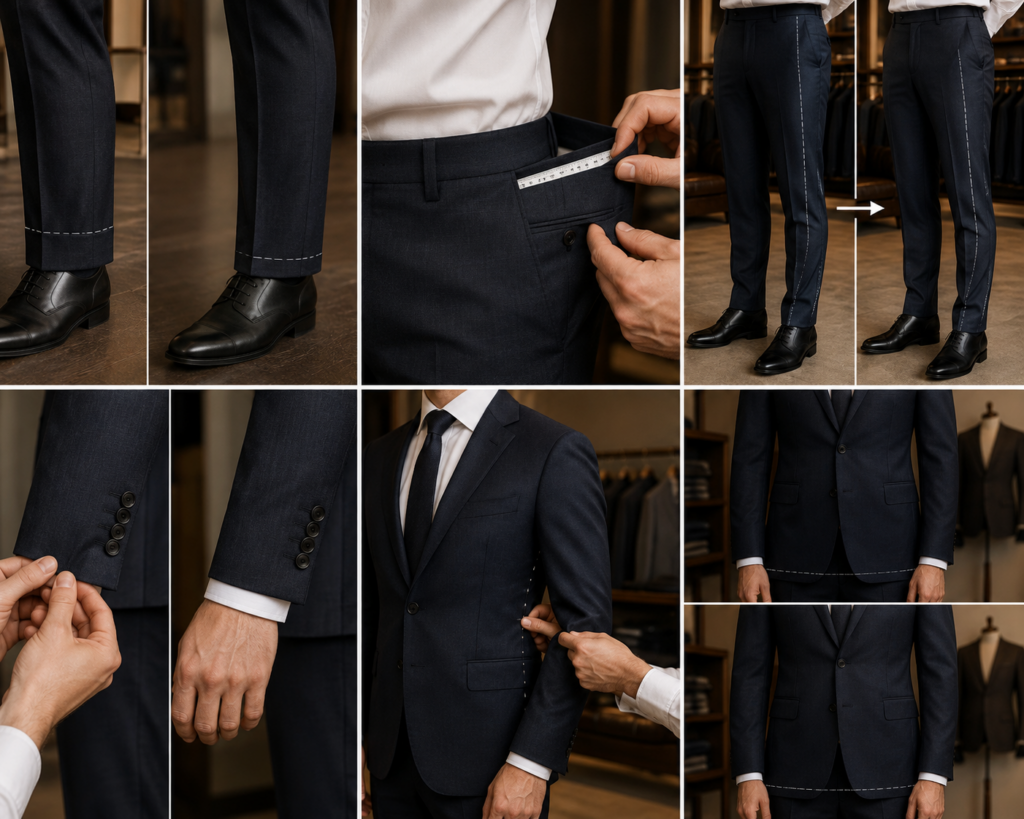
1. Trouser Length
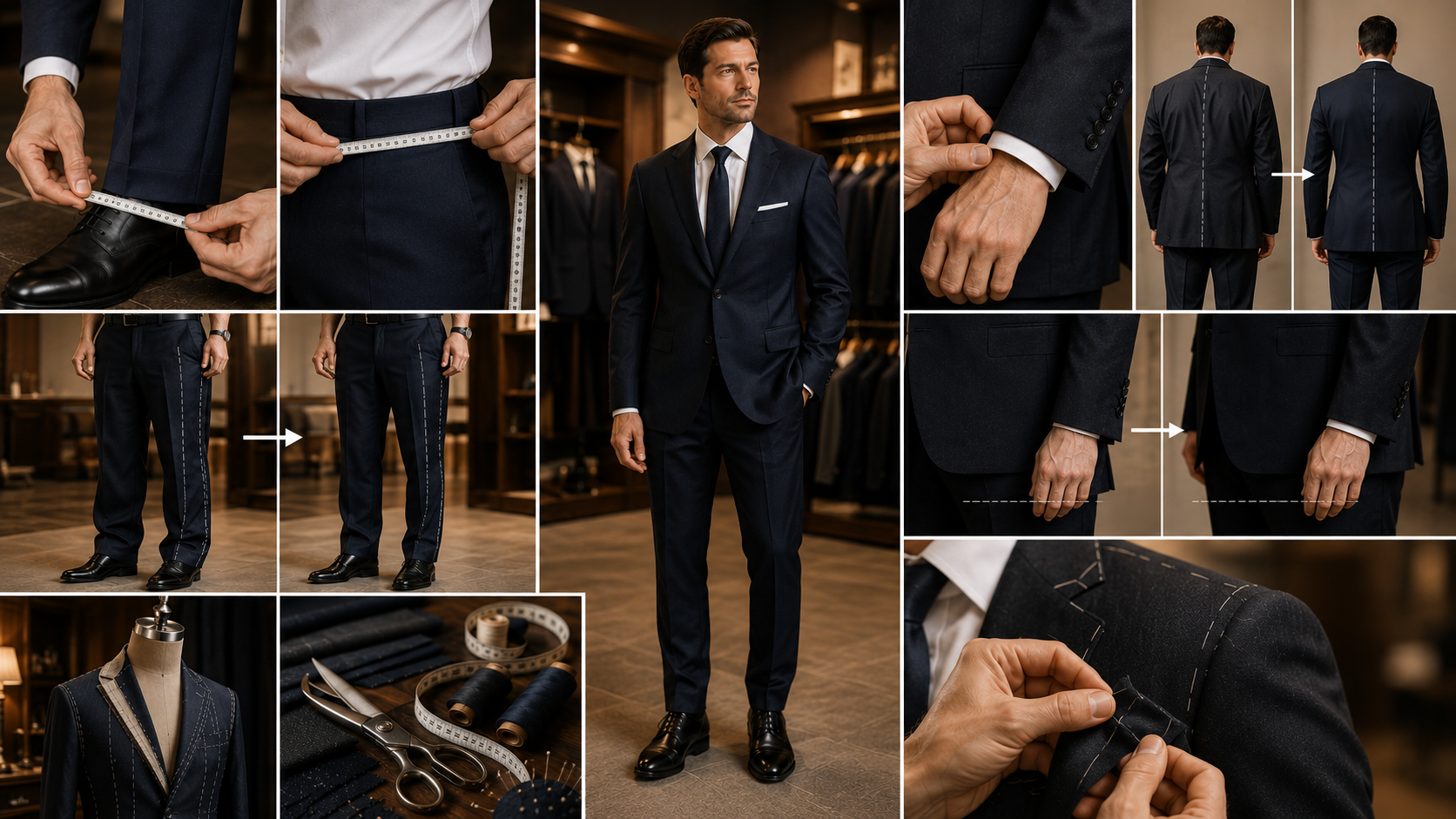
One of the easiest adjustments is trouser length. A tailor can shorten or, depending on the available fabric, lengthen trousers to create the right amount of break over your shoes.
This small change can make an immediate difference in how polished the entire suit looks.
2. Trouser Waist
If the waistband feels slightly too tight or loose, suit alterations can often correct it. Tailors can usually adjust the waist within a reasonable range while maintaining the original construction.
A small waist adjustment can make trousers feel considerably more comfortable without changing their overall appearance.
3. Trouser Taper
Too much fabric around the legs can make trousers appear loose or outdated. A tailor can taper the legs to create a cleaner silhouette.
The goal is not to make trousers extremely narrow, but to create a shape that follows your legs naturally.
4. Jacket Sleeve Length
Jacket sleeves can commonly be shortened and, in some cases, lengthened slightly if there is enough fabric available.
The ideal sleeve length should allow a small amount of shirt cuff to show, creating a balanced transition between the shirt and jacket.
5. Jacket Waist
If the jacket fits well through the shoulders but feels too loose around the midsection, a tailor can often take it in.
This adjustment can give the jacket a more defined silhouette without replacing the garment.
6. Jacket Length—Within Limits
Minor adjustments to jacket length may be possible, depending on the garment’s construction and proportions.
However, this is not an alteration that should be treated casually. Changing the length too much can affect the placement of the pockets, buttons, and overall balance of the jacket.
What Suit Alterations Usually Cannot Fix?
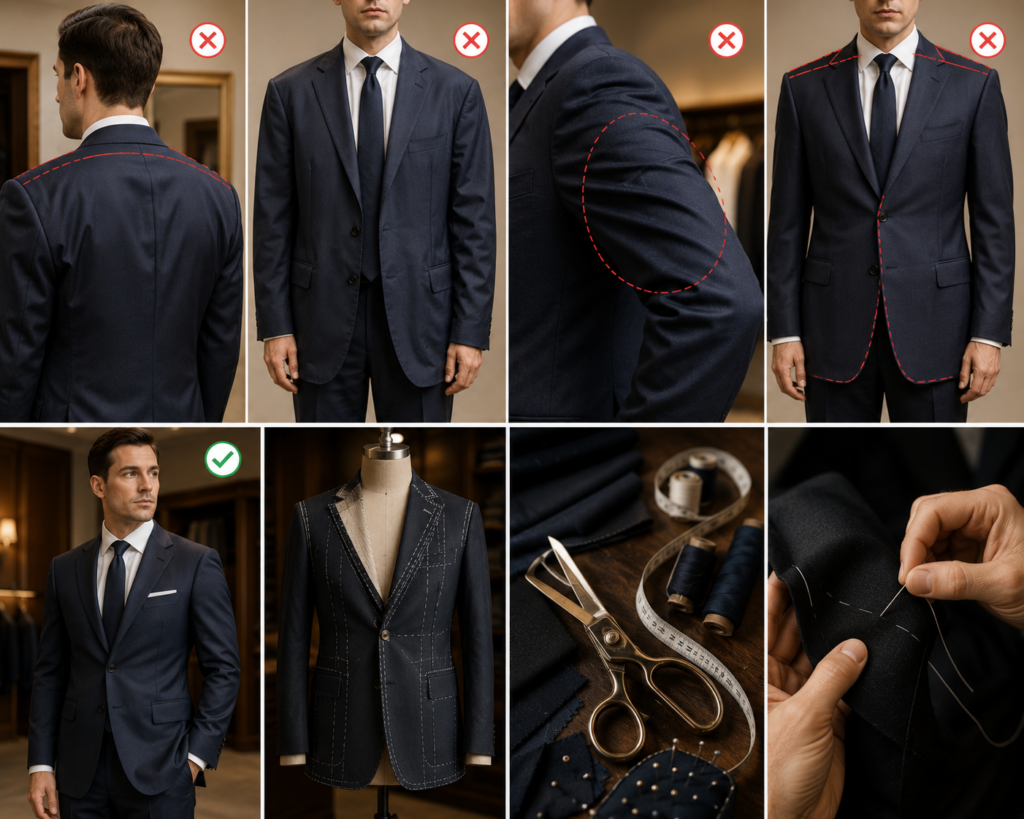
1. Poorly Fitting Shoulders
The shoulders are one of the most important parts of a suit jacket—and one of the hardest to correct.
If the shoulder is significantly too wide, too narrow, or structurally wrong for your frame, suit alterations may not be enough to solve the problem.
This is why getting the shoulders right before buying is so important.
2. A Jacket That Is Completely the Wrong Size
Tailoring can refine a good starting point, but it cannot transform every oversized or undersized suit into a perfect fit.
If the jacket is several sizes too large or too small, extensive alterations can affect its proportions and construction.
Starting with the right size gives your tailor much more to work with.
3. Armholes That Are Poorly Positioned
The armhole affects how naturally a jacket moves and sits on your body. If it is positioned incorrectly, correcting it can require major reconstruction.
In many cases, choosing a better-fitting jacket is more practical than attempting extensive alterations.
4. Major Changes to Jacket Proportions
A suit jacket is designed as a balanced system. The collar, pockets, buttons, lapels, sleeves, and hem all work together.
Changing one major proportion can make the rest of the jacket look out of balance. A skilled tailor knows when an alteration is technically possible but aesthetically unwise.
The Golden Rule: Alter the Fit, Not the Foundation
The best candidate for suit alterations is a suit that already fits reasonably well through the shoulders and overall frame.
Think of tailoring as refinement. It should improve the fit—not rescue a fundamentally unsuitable garment.
Before buying, pay particular attention to:
Shoulder width
Jacket chest
Jacket length
Armhole position
Overall proportions
Details such as sleeve length, trouser length, waist, and taper are generally much easier to adjust later.
Why Professional Suit Alterations Matter
Not all alterations are equal. A skilled tailor considers the fabric, construction, proportions, and intended silhouette before making changes.
For a premium suit, precision matters even more. Poor alterations can create pulling, uneven lines, distorted pockets, or an unnatural silhouette.
Professional suit alterations should make the changes look intentional—as though the suit was designed for you from the beginning.
When Should You Consider a Custom Suit Instead?
If you repeatedly struggle to find an off-the-rack suit that fits your shoulders, chest, waist, and proportions at the same time, the issue may not be the tailor.
It may be the starting garment.
A custom suit is built around your measurements and preferred silhouette from the beginning, reducing the need to make major corrections after purchase.
At Eastin Suits, expert tailoring and personalized fitting are designed to help you achieve a polished, comfortable fit that feels made for you.
Final Thoughts
Suit alterations can make a good suit significantly better—but they cannot fix everything.
The key is knowing the difference between a suit that needs a few finishing adjustments and one that simply does not fit your body properly.
Get the foundation right first. Then let an experienced tailor refine the details.
Because the best-fitting suit is not the one that has been altered the most. It is the one that needed the least correction to look like it was made for you.